
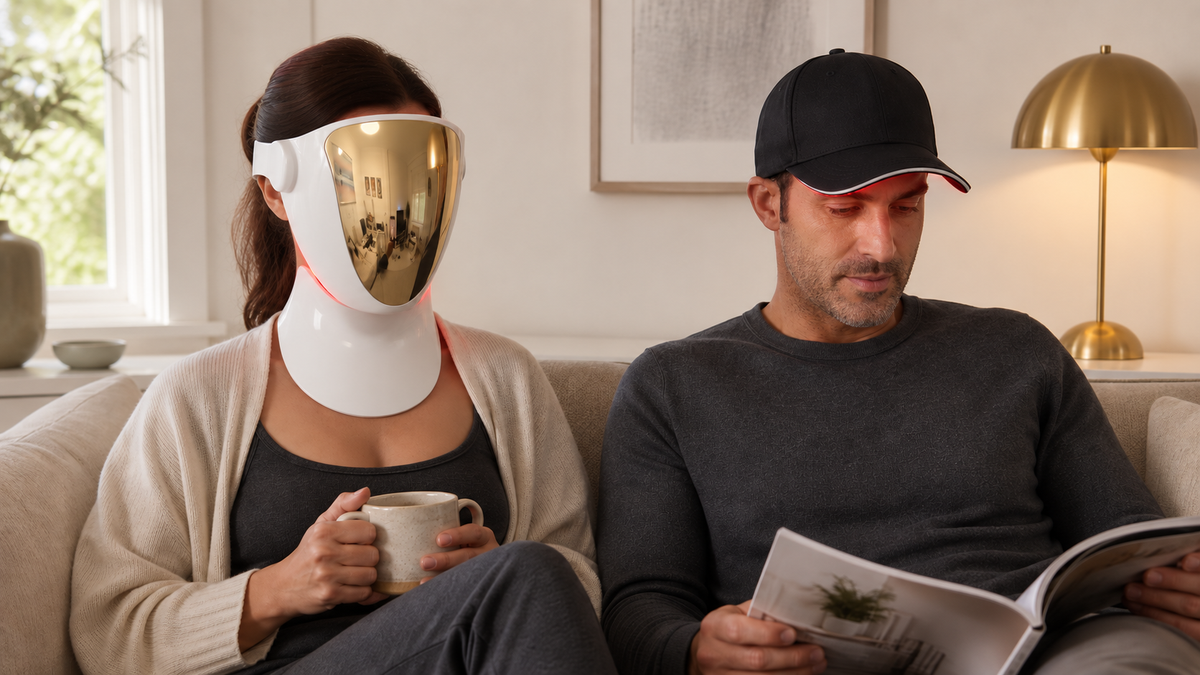
LED face masks and red light therapy caps have one major advantage over more complicated beauty equipment: they can work while you are already sitting down. That hands-free convenience makes it easier to turn good intentions into a consistent skin and scalp care routine.
This guide explains what each wearable format is built to do, how to prepare for a session, how to organise both products in one week and what to track when your goal is brighter-looking skin or fuller-looking hair.
Why consistency matters more than an elaborate routine
Most skincare and scalp plans do not fail because the customer chose the wrong day. They fail because the routine asks for too many steps, too much setup or too much attention.
A wearable device reduces that friction. Once the face is clean or the scalp is ready, the mask or cap holds the light in a predictable position. You can use the session for reading, listening or simply slowing down.
The goal is not to create the longest possible routine. It is to make the next session easy to begin.
What an LED face mask brings to a skincare routine
An LED face mask keeps the light close to the face, helping provide even coverage without requiring you to hold a lamp in place. A separate neck section extends the routine to an area that is often missed by face-only devices.
The LED Face & Neck Light Therapy Mask uses 807 Nano-LEDs across four light types:
- Red light for a routine focused on visible lines, firmness and a more radiant appearance.
- Near-infrared light to complement the visible red spectrum and support a deeper-feeling session.
- Blue light for customers building a routine around the appearance of breakouts and clearer-looking skin.
- Orange light for an appearance-led routine focused on dullness and uneven-looking tone.
The cordless design means the session is not tied to a particular chair or socket. That matters because convenience is often the difference between occasional use and a dependable weekly routine.
What a red light therapy scalp cap brings to hair care
A scalp cap places the light inside a familiar wearable shape. This allows the LEDs to remain close to the scalp while you read, work at a desk or relax at home.
The 96-LED Red & Near-Infrared Scalp Therapy Cap combines 660nm red and 850nm near-infrared light. It is made for customers who want to support thinning areas, scalp circulation and stronger, fuller-looking growth without turning every session into an appointment.
A cap is especially useful when:
- You want the LEDs to stay in a consistent position over the scalp.
- You prefer a hands-free device that can fit around normal home time.
- You want a discreet format rather than a large overhead setup.
- You are more likely to follow a routine when there is very little assembly.
LED face mask benefits: where the format earns its place
The main benefit of an LED face mask is repeatability. The shape determines the position, the face and neck are covered together, and your hands remain free. That makes it easier to use the device after cleansing without disrupting the rest of the evening.
Customers often choose a face and neck mask when they want to:
- Improve the look of dull or tired skin.
- Support a smoother, firmer-looking complexion.
- Build a focused routine around the appearance of breakouts.
- Bring the neck into the same care plan as the face.
- Create a calm transition between the day and the rest of their skincare.
The device should support the routine around it. Clean skin, comfortable positioning and a repeatable schedule matter more than constantly changing settings.
Red light therapy for hair: where the cap format helps
Hair and scalp goals tend to require patience, which makes convenience particularly valuable. A cap that can be worn during another quiet activity lowers the effort required to continue.
The cap format also makes positioning straightforward. Instead of trying to hold a lamp over a thinning area, the internal LEDs stay distributed around the scalp. This is useful for customers who want broader scalp coverage rather than one small target point.
Use the cap as part of a wider hair care plan that also considers gentle handling, a comfortable scalp environment and styling choices that do not add unnecessary pulling or friction.
How to prepare for an LED face mask session
- Cleanse the face and neck. Remove makeup, sunscreen and the day's surface build-up so the mask can sit comfortably.
- Dry the skin. A clean, dry surface helps the mask and neck section stay in their intended position.
- Choose the light setting around your goal. Keep the purpose of the session clear rather than moving between every colour.
- Adjust the fit before switching on. The mask should feel secure without creating distracting pressure.
- Use the supplied timing guidance. Let the device controls define the session rather than guessing from another mask.
- Continue with the rest of your skincare afterwards. Keep the products simple and familiar so you can understand how the complete routine feels.
How to prepare for a scalp cap session
- Start with a comfortable, dry scalp. Heavy styling products can make the session feel less pleasant and add unnecessary clean-up.
- Part or arrange the hair naturally. Avoid a tight style that creates pressure under the cap.
- Position the cap evenly. Use the same orientation each time so the coverage remains familiar.
- Choose a quiet activity. Reading, desk work or television can make the session easier to repeat.
- Follow the cap's own timing guidance. Do not copy the schedule from a face mask, body pad or different scalp device.
- Store it ready for next time. Keep the cable and controller organised rather than creating a fresh setup problem for every session.
Can you use an LED face mask and scalp cap on the same day?
The two devices cover different areas, so many customers prefer to place them in separate parts of the day. This keeps each session comfortable and prevents the routine from feeling like one long block of equipment time.
For example, the face mask can follow evening cleansing, while the scalp cap can be used during morning reading or desk work. Another option is to alternate them on different days so each product has a clear place in the week.
Follow the instructions supplied with each device. The settings and session guidance for a face mask should not be assumed to match a scalp cap simply because both use red light.
A simple weekly structure for skin and scalp care
Do not begin by filling every day. Start with the schedule recommended for each product and attach the sessions to activities that already happen.
- Face mask anchor: after evening cleansing and before moisturiser.
- Scalp cap anchor: during a regular reading, planning or television period.
- Reset day: clean the devices as directed, charge any cordless components and check the fit.
- Review point: take a consistent photo or short note at sensible intervals rather than checking the mirror after every session.
This approach makes the routine easier to judge. If the sessions keep moving around, it becomes difficult to know whether the plan is practical or whether the setup needs changing.
How to track visible progress without overthinking it
Daily changes in lighting, styling and sleep can affect how skin and hair look. Use a simple, repeatable check instead of relying on memory.
For skin
- Take photos in the same room and similar daylight.
- Keep the camera distance and angle consistent.
- Note visible texture, radiance, evenness and how makeup sits.
- Avoid introducing several new skincare products at the same time.
For hair and scalp
- Use the same parting and similar hair condition in photos.
- Track the areas that matter rather than photographing the entire head differently each time.
- Note how the scalp feels and whether the routine remains comfortable.
- Keep styling tension and major product changes in mind when comparing images.
The purpose of tracking is to make decisions, not to inspect yourself every day. A calm, consistent record gives you a clearer view of whether the routine fits your goals.
Common mistakes with wearable light therapy
Changing settings every session
Constant switching makes it harder to build a focused plan. Choose the setting that matches the outcome you care about and give the routine structure.
Using the devices only when you remember
Memory is a weak system. Attach the session to cleansing, reading or another reliable part of the day.
Ignoring fit and comfort
A mask that feels awkward or a cap that sits unevenly will be harder to keep using. Adjust the fit before the session begins.
Adding too many new products at once
If the face mask arrives on the same week as a completely new skincare routine, it becomes difficult to understand what is working well. Keep the surrounding routine stable where possible.
Expecting the device to do all the work
Visible skin and hair outcomes still benefit from sleep, balanced nutrition, gentle care and a routine you can sustain. Use light therapy as a practical part of that wider plan.
Frequently asked questions
How often should I use an LED face mask?
Use the frequency and session guidance supplied with your specific mask. LED count, light settings and output vary between products, so a schedule copied from another device may not fit yours.
Can I apply skincare before using the mask?
A clean, dry face gives the mask a simple and consistent starting point. Continue with your normal skincare after the session unless the product instructions say otherwise.
Does a red light therapy cap need to touch the scalp?
The cap should sit in the position described by its instructions so the internal LEDs can provide consistent coverage. Avoid bulky hairstyles that prevent an even, comfortable fit.
Is a scalp cap better than a panel for hair?
A cap offers close, hands-free and repeatable scalp coverage. A panel offers more flexibility for the face and body. Choose the cap when the scalp is the clear priority and convenience matters most.
Can men and women use the same scalp cap?
The cap format is suitable for any adult whose head size and fit match the product guidance. The goal is consistent, comfortable coverage rather than a gender-specific routine.
Make skin and scalp care easier to keep
Choose the LED Face & Neck Light Therapy Mask when your priority is a focused, wearable skincare session. Choose the 96-LED Scalp Therapy Cap when you want hands-free scalp coverage that fits around reading, work or downtime.
Both devices turn light therapy into something that can happen while life is already moving. Explore the Marlowe West collection and build the routine around the outcome you want to see.


Leave a comment
This site is protected by hCaptcha and the hCaptcha Privacy Policy and Terms of Service apply.