
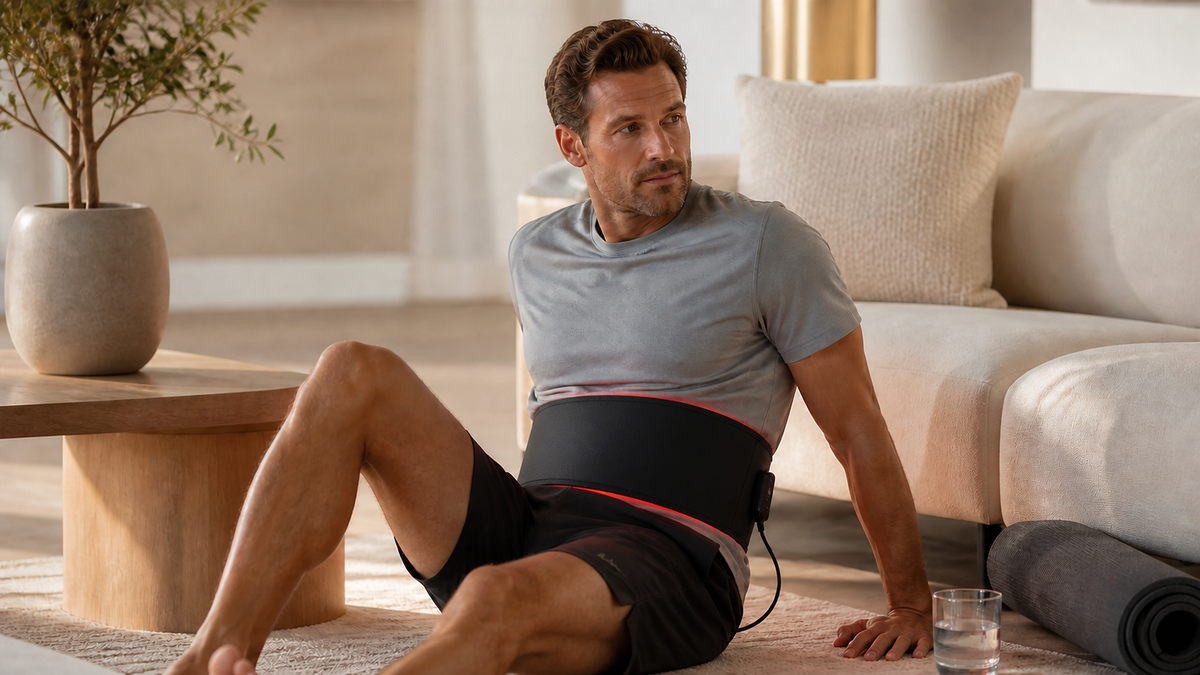
A good recovery routine should leave you ready to train, work and move again. It should not become another complicated job. Red light therapy for muscle recovery is most useful when the equipment fits the area you want to target and the session fits naturally around the rest of your day.
This practical guide explains how flexible pads, adjustable lamps and full-height panels can support post-workout comfort, when to use them, and how to build a repeatable at-home recovery routine.
Why recovery routines are often abandoned
People rarely stop recovering because they no longer care about performance. They stop because the routine takes too long, the equipment is awkward or the setup only works in perfect conditions.
For red light therapy to earn a permanent place in your week, it needs to answer three questions:
- Can it cover the muscles that worked hardest?
- Can you position it without fighting straps, furniture or cables?
- Can you use it at a reliable time without delaying sleep, meals or family life?
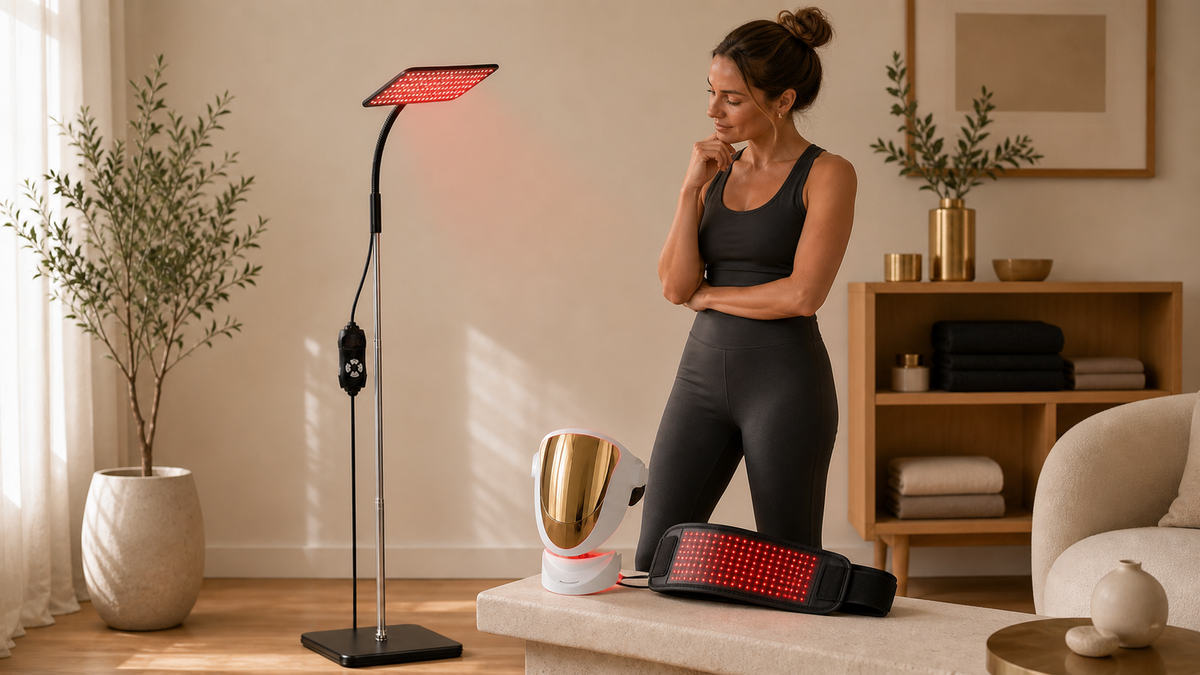
The right format removes those obstacles. A flexible pad brings the light close to a specific area. A panel covers more of the body at once. A compact lamp gives you a movable option for smaller areas.
How red and near-infrared light fit into recovery
Red and near-infrared wavelengths are often combined in recovery devices because they serve complementary purposes. Visible red light supports a surface-level wellness routine, while near-infrared light is commonly chosen for deeper-feeling muscle and joint comfort.
Marlowe West recovery devices use a combination of 660nm red and 850nm near-infrared light. That pairing is especially useful when you want one session to support both visible skin exposure and the hard-working area underneath.
The wavelength numbers matter, but they are only part of the decision. Coverage, comfort, positioning and consistency will usually have a bigger effect on whether you keep using the device.
Flexible body pad or full-height panel?
Choose a flexible body pad for focused contact
A flexible body pad can wrap around the lower back, waist, shoulder, abdomen or leg. This makes it a strong option when the target area curves or when you want to relax on a sofa while the device stays in position.
The Flexible Red & Near-Infrared Body Therapy Pad offers half-body and full-body sizes, up to 1,080 active light channels, adjustable warmth, five brightness levels and timed pulse modes. It is built for customers who know where they want support and want the light to remain close to that area.
A body pad is particularly useful after:
- Lower-body strength sessions that leave the hips, glutes or thighs feeling worked.
- Long runs, hikes or cycling sessions that create general leg fatigue.
- Upper-body training that places repeated demand on the shoulders and back.
- Long journeys or desk-heavy days that leave the waist and lower back feeling tight.
Choose a full-height panel for broader coverage
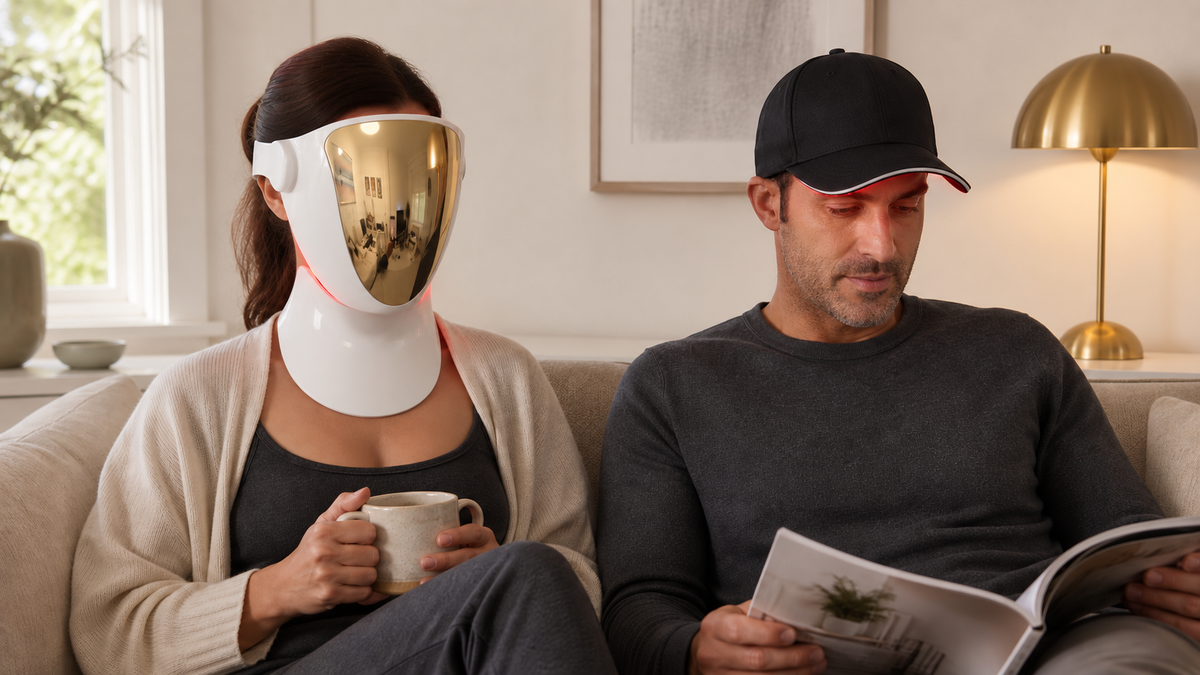
A panel is the better fit when you want to cover several areas without moving a wrap between them. It also suits households where one person may focus on post-training recovery while another wants a skin or general wellness session.
The Full-Height Red & Near-Infrared Light Therapy Panel uses 126 LEDs across 660nm and 850nm wavelengths. The adjustable height, five intensity levels and remote control help you move from upper-body to lower-body coverage without rebuilding the setup.
A full-height panel is particularly useful when:
- Your training programme works several major muscle groups each week.
- You prefer standing or seated sessions rather than wearing a wrap.
- More than one person will use the equipment.
- You have a clear floor area where the device can stay ready.
Choose an adjustable lamp for smaller areas
A compact lamp works well when the target is a knee, shoulder, hand, foot or another area that does not need full-body coverage. It is easier to move between rooms and takes less storage space than a large panel.
The Adjustable Red & Near-Infrared Light Therapy Lamp uses 30 LEDs across the same 660nm and 850nm combination. It is a sensible starting point for a focused recovery routine or for anyone who wants a flexible secondary device.
When should you use red light therapy after a workout?
The best time is the time you can repeat. Some people prefer to use red light therapy soon after training, when they are already changing, stretching and hydrating. Others find that an evening session fits better because it turns recovery into a calmer transition out of the day.
Use these practical rules:
- After training: choose the muscles that carried the most load rather than trying to cover everything.
- Later in the day: use the session as a clear reminder to slow down, hydrate and prepare for sleep.
- On rest days: focus on the areas that still feel worked and keep the rest of the routine light.
- During busy weeks: shorten the setup, not the habit. A focused pad session is more useful than an ambitious plan you skip.
Follow the timing, intensity and distance guidance supplied with your device. A wraparound pad and a freestanding panel are positioned differently, so they should not be used with an identical copied schedule.
A simple post-training red light therapy routine
- Finish the basics first. Cool down, change out of damp clothing and drink water.
- Choose one priority area. Base the session on what you trained and how your body feels, not on covering every muscle.
- Position the device consistently. Secure the pad comfortably or place the panel at the recommended distance and height.
- Select a comfortable setting. Start with a level you can relax with rather than chasing maximum intensity.
- Let the session support another useful habit. Pair it with calm breathing, light mobility, reading or planning tomorrow's training.
- Reset the equipment when you finish. Fold or position it neatly, charge controllers when needed and leave it ready for next time.
This structure keeps the routine focused. It also gives you a stable baseline, so you can decide whether changing the target area, position or intensity improves the experience.
How to use a body pad for common recovery goals
Lower back and waist
Wrap the pad so it sits evenly across the area rather than pulling tightly at one edge. A supported seated position usually makes it easier to relax without twisting.
Shoulders and upper back
Choose a chair or sofa that lets the pad remain flat against the target area. Avoid building a complicated arrangement of cushions that changes the position every few minutes.
Thighs and legs
Use a stable seated or reclined position and focus on one side or area at a time when the pad cannot cover both evenly. Consistent contact is more useful than stretching the device beyond its intended fit.
General full-body fatigue
When several large areas feel worked, a height-adjustable panel may be more convenient than moving a pad repeatedly. This is where broader coverage can save time and make the routine easier to repeat.
What to pair with red light therapy for better recovery habits
Red light therapy should strengthen the rest of your recovery approach, not replace it. The strongest routine still includes the fundamentals:
- Hydration: replace fluids steadily after training rather than waiting until the evening.
- Protein and balanced meals: give the body the building blocks it needs after demanding sessions.
- Sleep: protect a consistent bedtime, especially during harder training blocks.
- Light movement: walking and comfortable mobility work can help you avoid feeling fixed in one position.
- Training control: recovery equipment cannot compensate for adding load faster than your body can manage.
Pairing light therapy with one or two of these habits can turn the session into a useful recovery anchor rather than an isolated gadget.
Common mistakes that make recovery sessions less useful
Using every setting at once
More intensity, warmth or pulsing is not automatically better. Choose a comfortable starting point and change one variable at a time.
Moving the device constantly
Frequent repositioning makes it difficult to build a repeatable routine. Choose the priority area before the session begins.
Only using it after your hardest workout
A routine is easier to assess when it has a predictable place in the week. Do not wait until you feel completely drained to remember the equipment exists.
Buying for coverage you cannot accommodate
A large panel needs a stable place to stand. If the floor space is not available, a flexible pad or compact lamp may produce a much better customer experience.
Frequently asked questions
Is a red light therapy pad better than a panel for muscle recovery?
A pad is better for close, wraparound coverage of a known area. A panel is better for larger areas, several muscle groups or a household with different goals. The best choice depends on coverage and convenience.
Can I use red light therapy on rest days?
Yes, a rest day can be a convenient time for a calm recovery session. Keep the target area and settings aligned with the device instructions and your normal routine.
Should the light feel very hot?
Red light and near-infrared devices can feel warm, and some pads include adjustable heating. The session should remain comfortable. Use the controls supplied with the product rather than treating maximum heat as the goal.
Which device is easiest for beginners?
If you have one clear target area, a flexible pad or adjustable lamp is usually the simplest place to start. If you already know you want broader face and body coverage, a height-adjustable panel may be more efficient.
Build a recovery setup you will keep using
Choose the flexible body therapy pad when you want close, targeted coverage. Choose the full-height panel when you want broader recovery with fewer position changes. Choose the adjustable lamp when space is limited or the target area is small.
The strongest recovery routine is the one that feels straightforward after a demanding day. Explore Marlowe West light therapy equipment and start with the format that fits your training, space and schedule.

Leave a comment
This site is protected by hCaptcha and the hCaptcha Privacy Policy and Terms of Service apply.