
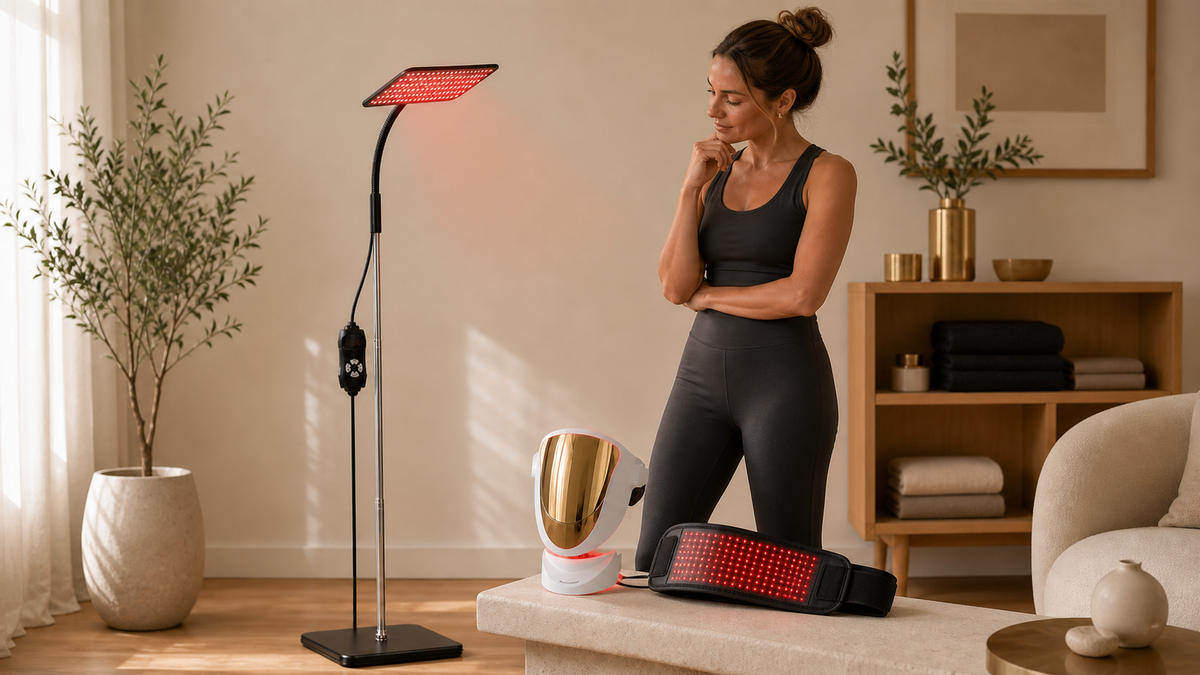
Red light therapy at home becomes much easier when you choose the device around the result you want, the area you want to cover and the routine you can actually keep. A face mask, flexible body pad, scalp cap and full-height panel all use light, but they solve very different practical problems.
This guide explains how each format fits into everyday life, what the main red and near-infrared wavelengths are used for, and how to choose a setup that will not be abandoned in a cupboard after two weeks.
The quick answer: choose by outcome and coverage
- For a focused face and neck routine: choose a wearable LED mask that keeps the light close to the areas you want to target.
- For a relaxing multi-colour facial: choose a canopy that can cover the face without being worn.
- For tight muscles and targeted body comfort: choose a flexible pad that wraps around the back, waist, shoulders or legs.
- For a hands-free scalp routine: choose an LED cap that fits into normal home or travel time.
- For broader face and body coverage: choose an adjustable panel that can be positioned at different heights.
- For a compact treatment area: choose an adjustable lamp that can sit beside a chair, desk or bed.
The best red light therapy device is not automatically the largest or most expensive option. It is the one that gives the right coverage with the least friction.
What red light therapy at home is trying to improve
At-home light therapy is usually chosen for one of four reasons: improving the visible appearance of skin, supporting a fuller-looking scalp, making post-training recovery feel easier or bringing targeted warmth and comfort to hard-working areas.
Red light is commonly used in appearance-led and surface-level routines. Near-infrared light reaches beyond the visible red spectrum and is often chosen when the goal includes muscles, joints or broader recovery. Many Marlowe West devices combine 660nm red light with 850nm near-infrared light so one session can support both visible and deeper-feeling outcomes.
More wavelengths do not automatically make a device better. The right question is whether the wavelength mix, shape and controls suit your goal.
Face masks: focused, wearable skincare
An LED face mask is the straightforward choice when your main concern is the visible appearance of the face and neck. Because the light source stays close to the skin, the coverage remains consistent while you sit back, listen to a podcast or finish a quiet part of your evening.
The LED Face & Neck Light Therapy Mask uses 807 Nano-LEDs across red, blue, orange and near-infrared wavelengths. The separate neck section extends the routine below the jawline, while the cordless format removes the need to sit beside a wall socket.
Choose a mask if: your priority is a repeatable face and neck routine, you prefer hands-free use and you want the same positioning each time.
Canopies: a relaxed facial without wearing a mask
A light therapy canopy suits customers who want broader facial coverage without a device resting on the face. It also gives more freedom to use the session as quiet downtime.
The 7-Colour LED Light Therapy Canopy with Hydrating Mist combines seven light settings with a hydrating mist function. It is a stronger fit for someone who enjoys adapting a skincare session around changing concerns such as dullness, uneven-looking tone or the appearance of breakouts.
Choose a canopy if: you dislike wearable masks, want multi-colour options and have a dedicated surface where the device can remain ready to use.
Flexible body pads: targeted recovery that wraps around you
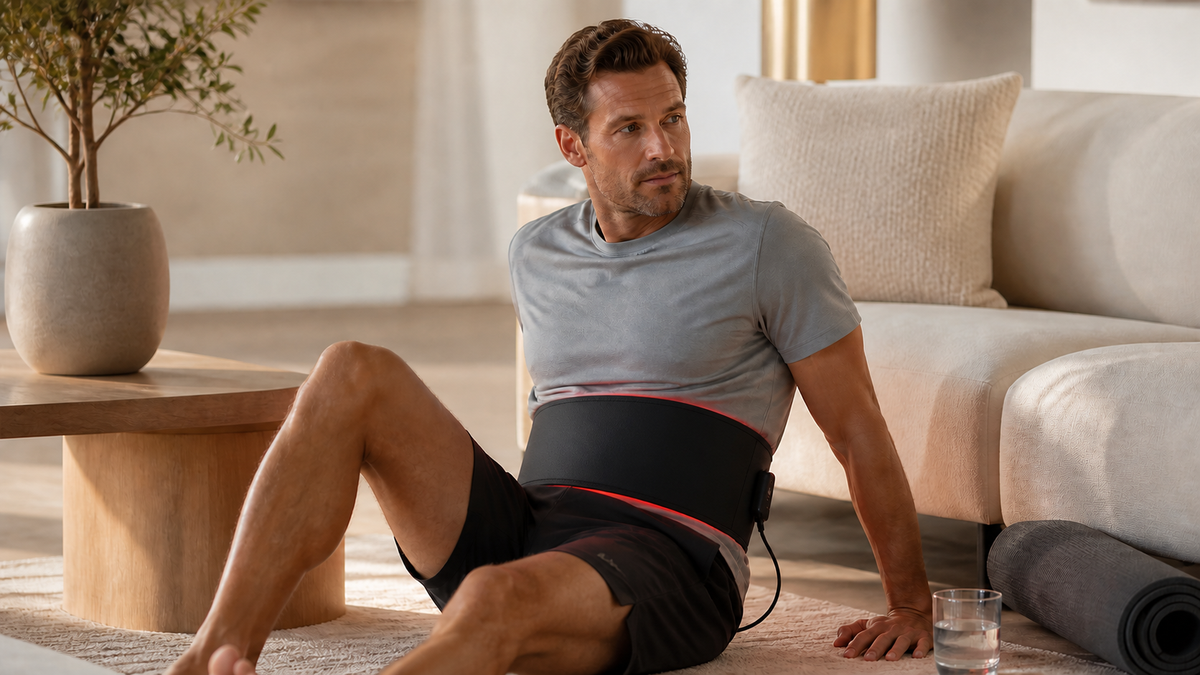
A flexible red light therapy pad is useful when a flat lamp cannot stay close to a curved area. The pad can follow the shape of the waist, lower back, shoulder, abdomen or leg, helping keep the light where you want it while you relax.
The Flexible Red & Near-Infrared Body Therapy Pad offers half-body and full-body formats with adjustable warmth, five brightness levels and timed pulse modes. Its flexible construction makes it the practical choice for targeted muscle comfort after training, travel or a long day at a desk.
Choose a body pad if: you know which area you want to focus on and prefer contact-style coverage that moves with the body.
Scalp caps: consistency without stopping your day
Scalp routines often fail because the setup is inconvenient. A wearable cap removes much of that resistance by keeping the light in position while leaving your hands free.
The 96-LED Red & Near-Infrared Scalp Therapy Cap combines 660nm red and 850nm near-infrared light inside a discreet black cap. It can be used while reading, working at a desk or relaxing at home, which makes repeat sessions easier to maintain.
Choose a scalp cap if: your focus is thinning areas, you want hands-free use and you value a device that does not make the session feel like an appointment.
Full-height panels: broader coverage with one setup
A full-height red light therapy panel is the strongest option when you want to move between the face, upper body and lower body without buying a separate device for every area. The trade-off is that it needs clear floor space and a regular position in the home.
The Full-Height Red & Near-Infrared Light Therapy Panel uses 126 LEDs across 660nm and 850nm wavelengths. Its height-adjustable stand, five intensity levels and remote control make it easy to change the target area without rebuilding the setup.
Choose a full-height panel if: several people may use the device, your goals include both skin and recovery, or you want one flexible system for larger areas.
Adjustable lamps: compact, focused and easy to position
A smaller lamp gives you targeted light without committing floor space to a full-height setup. It works well for shoulders, knees, hands, feet or a focused facial area, provided the lamp can be positioned securely.
The Adjustable Red & Near-Infrared Light Therapy Lamp uses 30 LEDs across 660nm and 850nm wavelengths. Its compact form makes it useful for customers who want to test where light therapy fits into their routine before moving to broader coverage.
Choose an adjustable lamp if: storage space is limited, the target area is small or you want a device that can move between rooms.
Five questions to ask before buying
- What is the first outcome I want? Start with skin, scalp, targeted comfort or broad recovery. A clear first goal prevents overbuying.
- How much area needs coverage? A mask makes sense for the face. A pad or panel makes more sense for the back, legs or several areas.
- Where will the device live? Equipment that is already positioned is easier to use than equipment that must be unpacked every time.
- What will I do during a session? If you want to read, work or relax, a wearable or wraparound format may be easier to keep using.
- Who else will use it? A height-adjustable panel may offer better value for a household with several different goals.
How to build a routine that lasts
Consistency matters more than creating an elaborate schedule. Choose a reliable point in your day, keep the device charged or positioned, and follow the timing and distance guidance supplied with that specific product.
A simple structure could look like this:
- Use a face mask after cleansing and before the rest of your evening skincare.
- Use a body pad after training, after travel or during an evening wind-down.
- Use a scalp cap during reading, desk work or a regular television programme.
- Use a panel at a fixed time when the room and floor space are already clear.
Avoid changing the device position, intensity and routine every session. A repeatable setup makes it easier to understand what feels useful and what needs adjusting.
Common red light therapy buying mistakes
Choosing maximum coverage for a very small goal
If your only priority is the face, a full-height panel may add setup without adding convenience. Start with the format that fits the target area.
Ignoring storage and positioning
A technically impressive device will not help if using it requires moving furniture. Measure the space and decide where it will live before buying.
Copying another device's routine
Light output, distance and controls vary. Follow the instructions for the product you own rather than borrowing a schedule from a different mask, panel or pad.
Expecting one session to prove everything
At-home light therapy works best as a steady part of a wider skincare or recovery routine. Make it easy to repeat, then assess how it fits your goals over time.
Which Marlowe West device should you start with?
If your goal is clearly defined, start with the most focused format. Choose the face and neck mask for a wearable skincare routine, the body pad for wraparound recovery, the scalp cap for hands-free hair support, or the full-height panel for broader household use.
If you are still comparing options, explore the complete Marlowe West collection and choose by the outcome, coverage and routine you want to build.

Leave a comment
This site is protected by hCaptcha and the hCaptcha Privacy Policy and Terms of Service apply.